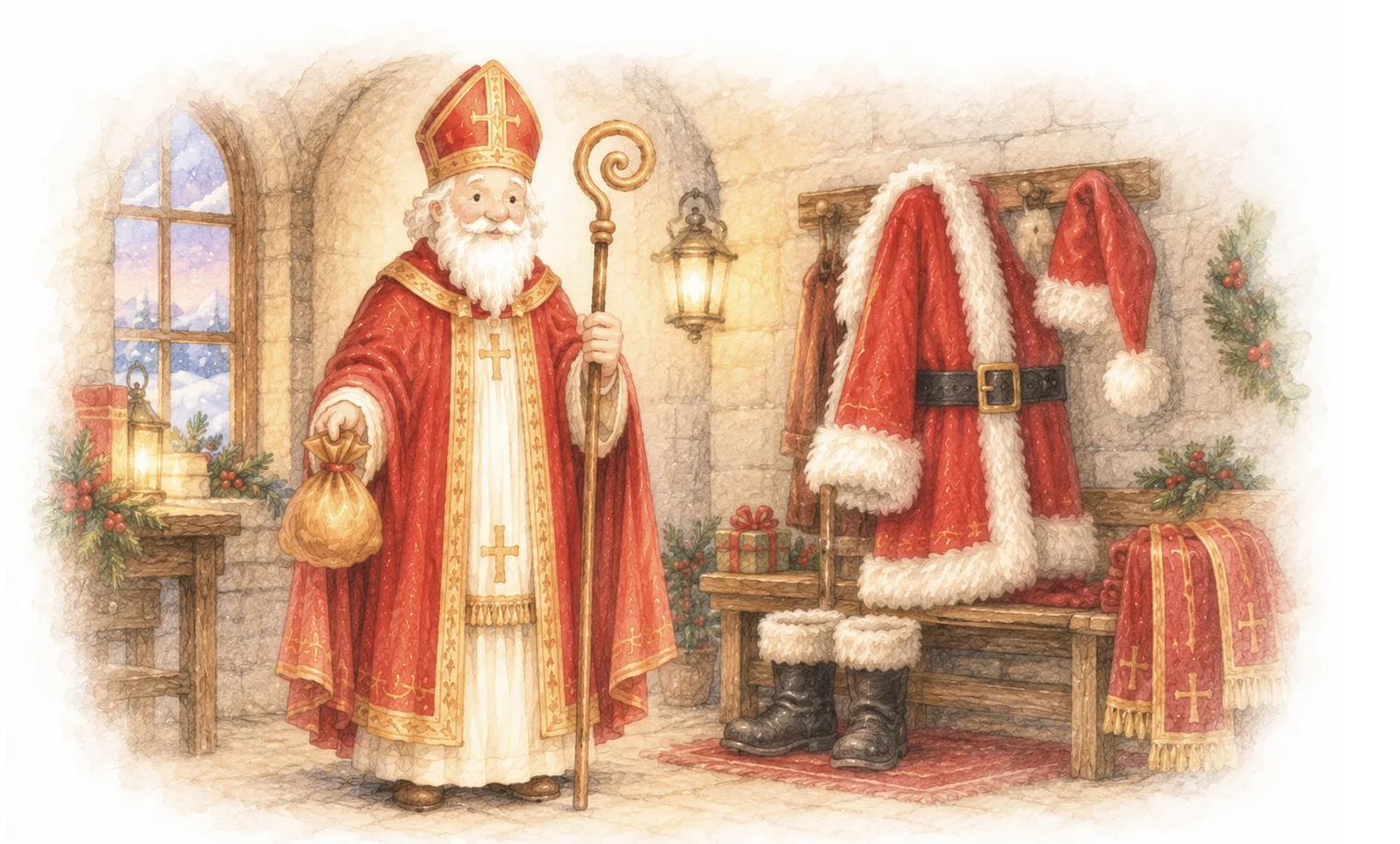
Before he was Santa Claus, Saint Nicholas was a bishop. European artists and storytellers pictured him in a bishop’s red robes and tall pointed cap called a mitre. The Dutch carried that same image with them when they brought “Sinterklaas” to America.
Over time, the robe changed shape without ever losing its color. The stiff mitre softened into the floppy winter hat we know today. The formal bishop’s vestments grew warmer, trimmed in soft white fur, better suited for a long night of travel through the cold than for standing at a church altar. Piece by piece, a holy man’s robes became a traveler’s coat, built for giving in the dead of winter.
Through every change, the red stayed. It’s the one thread connecting a real bishop in the year 270 to the Santa children dream about today, proof that he was never invented out of nothing. He was simply dressed differently, generation after generation, as his story was carried forward, like a game of telephone, adapting to fit its new context.
Somewhere along the way, as his story kept being retold, the real meaning of that red began to fade behind the commercialism and consumerism of the season instead. I want to put the true story of Saint Nicholas back into family traditions. I want it to be common knowledge that Santa and his legacy of secret giving, generosity, and life-changing acts are more real than you ever could have imagined, and it’s up to you and the next generation to keep his spirit alive.
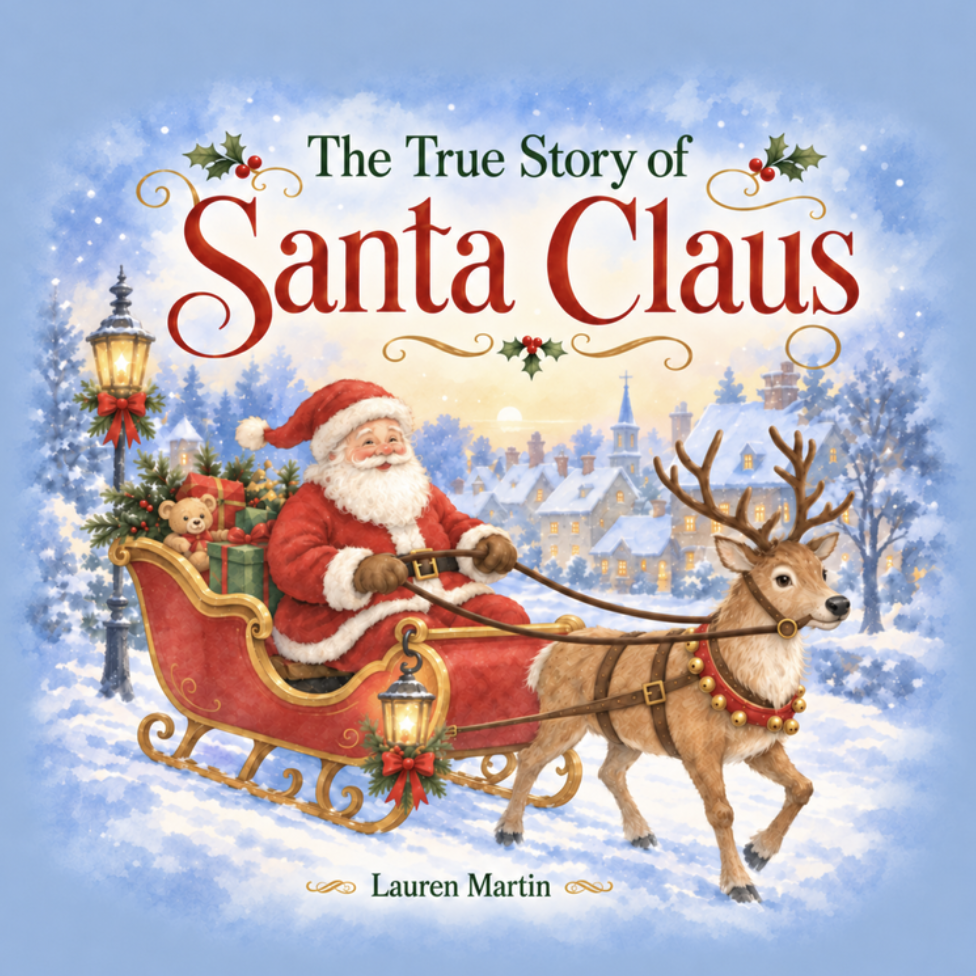
That’s the whole point of my newest book, The True Story of Santa Claus. I want children to remember this:
“The parts of Santa’s story that feel the most make-believe are often the ones with the oldest, truest roots.”
Next up: Meet the real elves, Tomte and Nisse, and the folklore behind Santa’s helpers.
A free way to start the conversation now
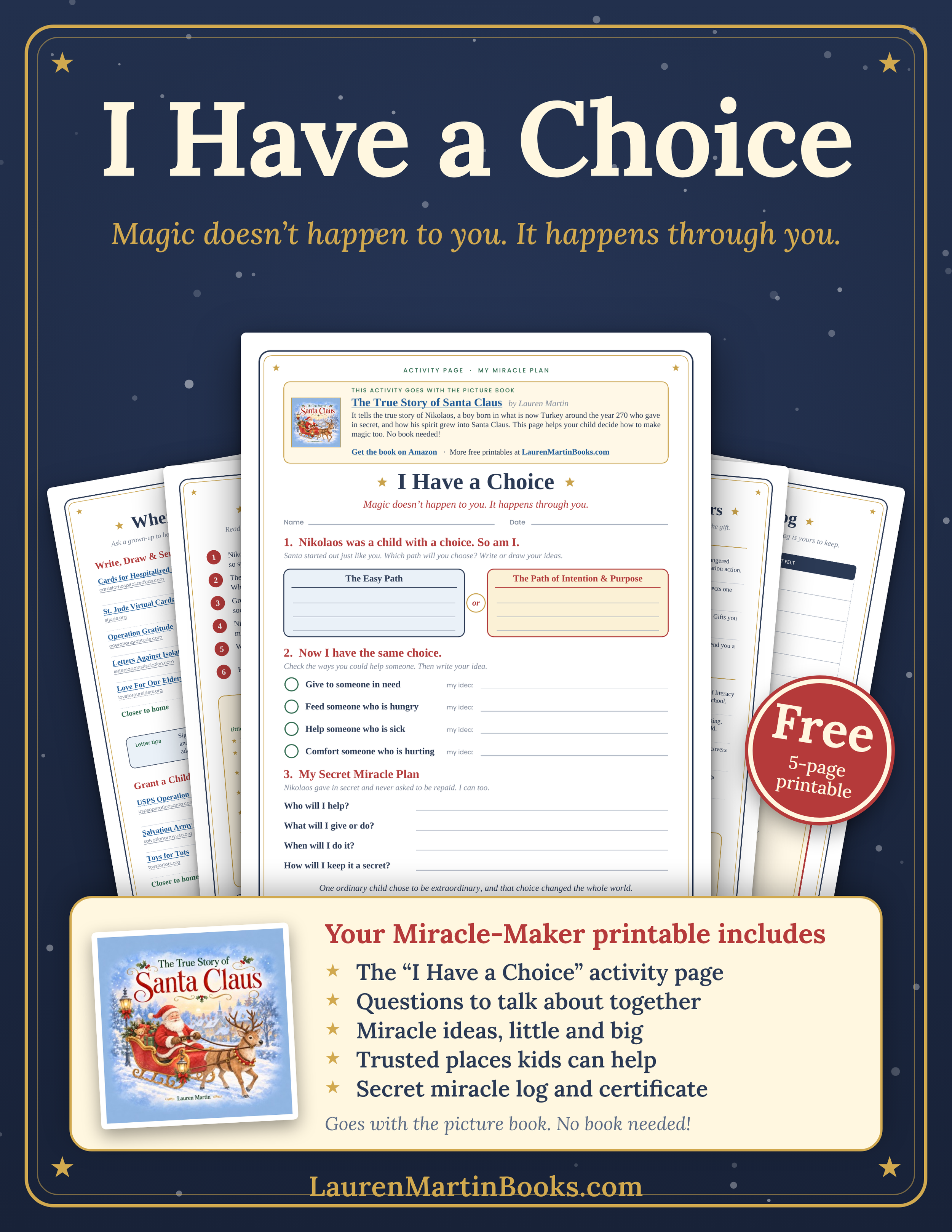
You don't need the book or to be ready to answer the question yet to start teaching your kids that they have the power to create magic, miracles, and joy for others. I made a free companion printable, the Miracle Maker, that walks kids through the same idea in the book: Magic doesn't happen to you, it happens through you.
It includes:
A page where your child plans their own "Secret Miracle": who they'll help, what they'll do, and how they'll keep it a secret
Conversation starters for grown ups and kids to brainstorm ideas together
A list of trusted, kid safe places to send cards, grant a child's Christmas wish, or give to a charitable cause
A Miracle Log and an official Miracle Maker certificate
Print it out, grab your kids, and let them decide how they'll make an ordinary day extraordinary for someone else. That's how Santa’s spirits continues to be real. That’s how his miracles and generosity have continued and will continue for millennia. Not because we tell kids to believe, but because we show them how to become the reason someone else does.