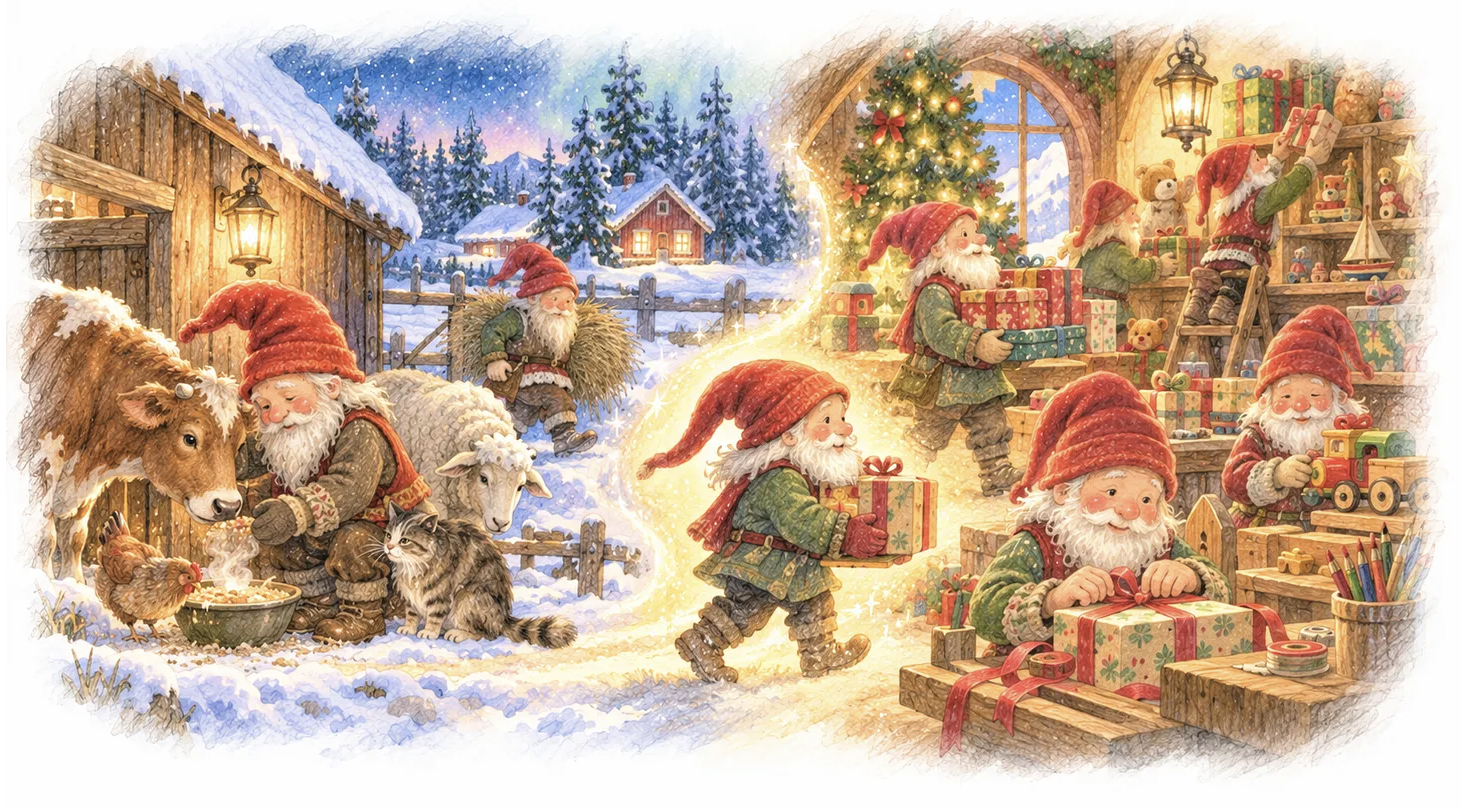
Centuries before anyone imagined elves wrapping gifts in a North Pole workshop, Scandinavian families already believed something small and watchful lived on their land. In Sweden, they called him Tomte. In Norway, Nisse. A tiny, bearded gnome in a red cap and farm clothes, who protected the farm, cared for the animals, and worked quietly through the night while everyone slept.
He wasn't always gentle. Tomte and Nisse had tempers, and families who forgot to thank him, or worse, mistreated their animals, could expect mischief in return. But treated with kindness, he was fiercely loyal. Every Christmas Eve, families left out a bowl of warm porridge, often with a pat of butter on top, as thanks for a year of quiet, unseen work.
When stories of Saint Nicholas reached these same villages, people noticed something familiar. Both Tomte and Saint Nicholas gave in secret. Both asked for nothing in return. Both watched over the people and places they loved without ever needing credit for it. Over time, the two traditions wove together, and the solitary farm guardian became one of Santa's helpers, small, hardworking, and still fiercely devoted to the people he serves.
Just as humble families long ago left sweet porridge, we now leave cookies. Across time and space, we intuitively understand that gratitude, given with joy and excitement, is the most powerful gift. We feel compelled to show someone how much they’re appreciated, not just in words, but in actions.
I want children to remember the power of literally giving thanks, beyond Santa. I want them to show tangible gratitude to every provider, gift giver, magic maker, loved one, and friend who makes their world brighter, in big and small ways.
I want children to remember:
“Sincere expressions of gratitude, and small acts of thoughtfulness, can become part of a story that lasts for centuries.”
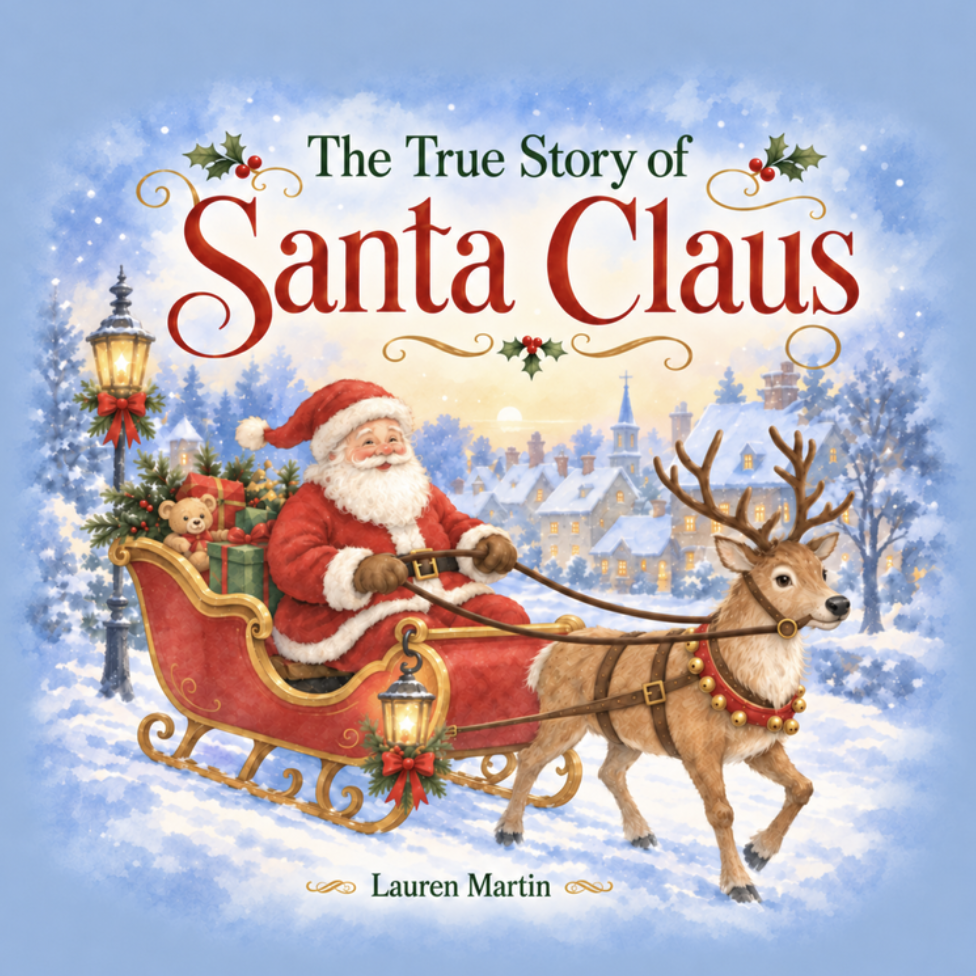
That’s the whole point of my newest book, The True Story of Santa Claus. The elves weren’t invented to sell toys. They were already real, in barns and farmhouses, long before anyone pictured them in a workshop. Like guardian angels, they made families and children feel safe, protected, and cared for. Every season a family survived and thrived, they thanked their guardians, never forgetting to take time to feel and show appreciation for their good fortune, no matter how humble their circumstances. Every detail of Santa’s story has survived for over 1,700 years because real families believed generosity and gratitude were worth remembering.
Next up: Where did Santa's flying reindeer really come from? If you want the picture book, The True Story of Santa Claus, or free printables to bring these ideas to life, click the links below. ⭐
A free way to start the conversation now
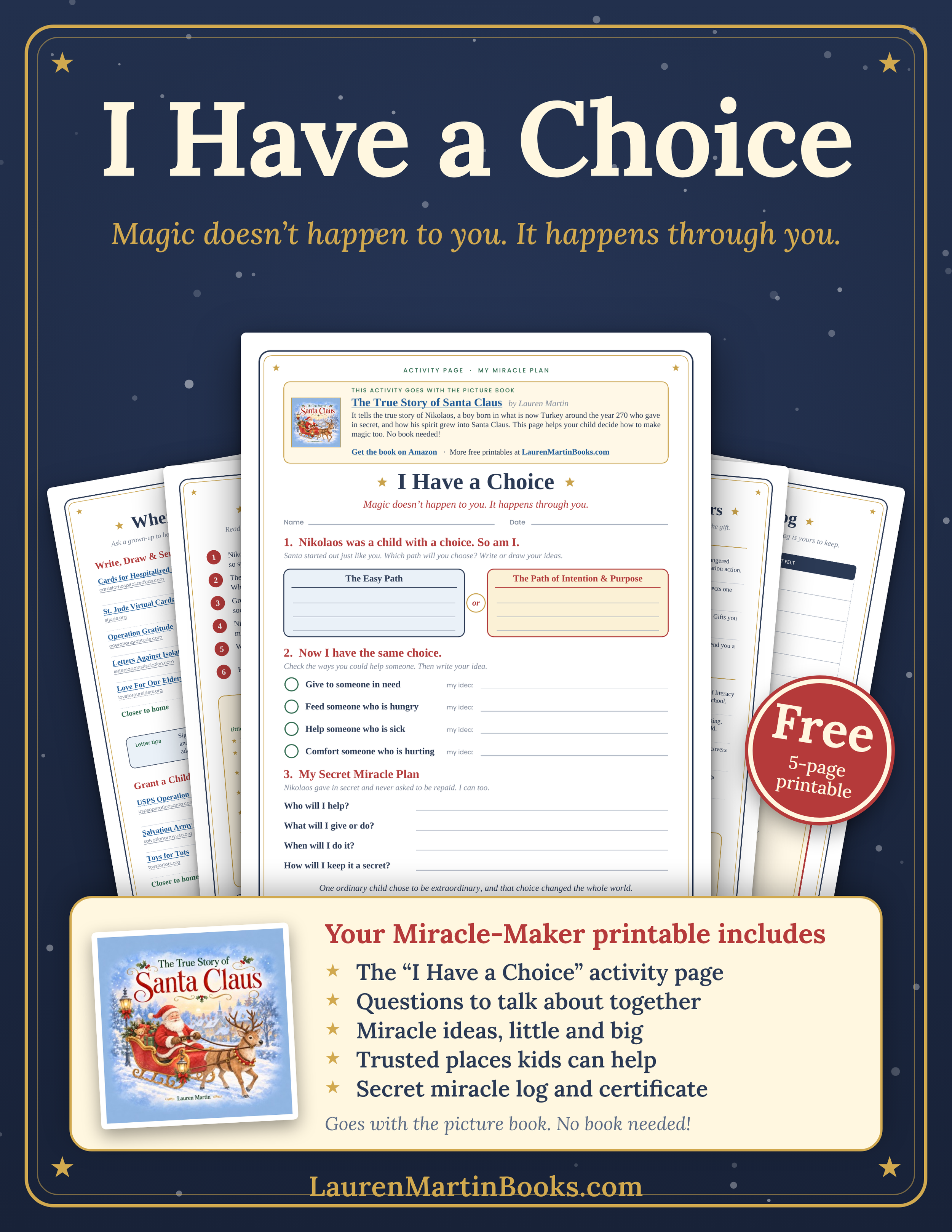
You don't need the book or to be ready to answer the question yet to start teaching your kids that they have the power to create magic, miracles, and joy for others. I made a free companion printable, the Miracle Maker, that walks kids through the same idea in the book: Magic doesn't happen to you, it happens through you.
It includes:
A page where your child plans their own "Secret Miracle": who they'll help, what they'll do, and how they'll keep it a secret
Conversation starters for grown ups and kids to brainstorm ideas together
A list of trusted, kid safe places to send cards, grant a child's Christmas wish, or give to a charitable cause
A Miracle Log and an official Miracle Maker certificate
Print it out, grab your kids, and let them decide how they'll make an ordinary day extraordinary for someone else. That's how Santa’s spirits continues to be real. That’s how his miracles and generosity have continued and will continue for millennia. Not because we tell kids to believe, but because we show them how to become the reason someone else does.