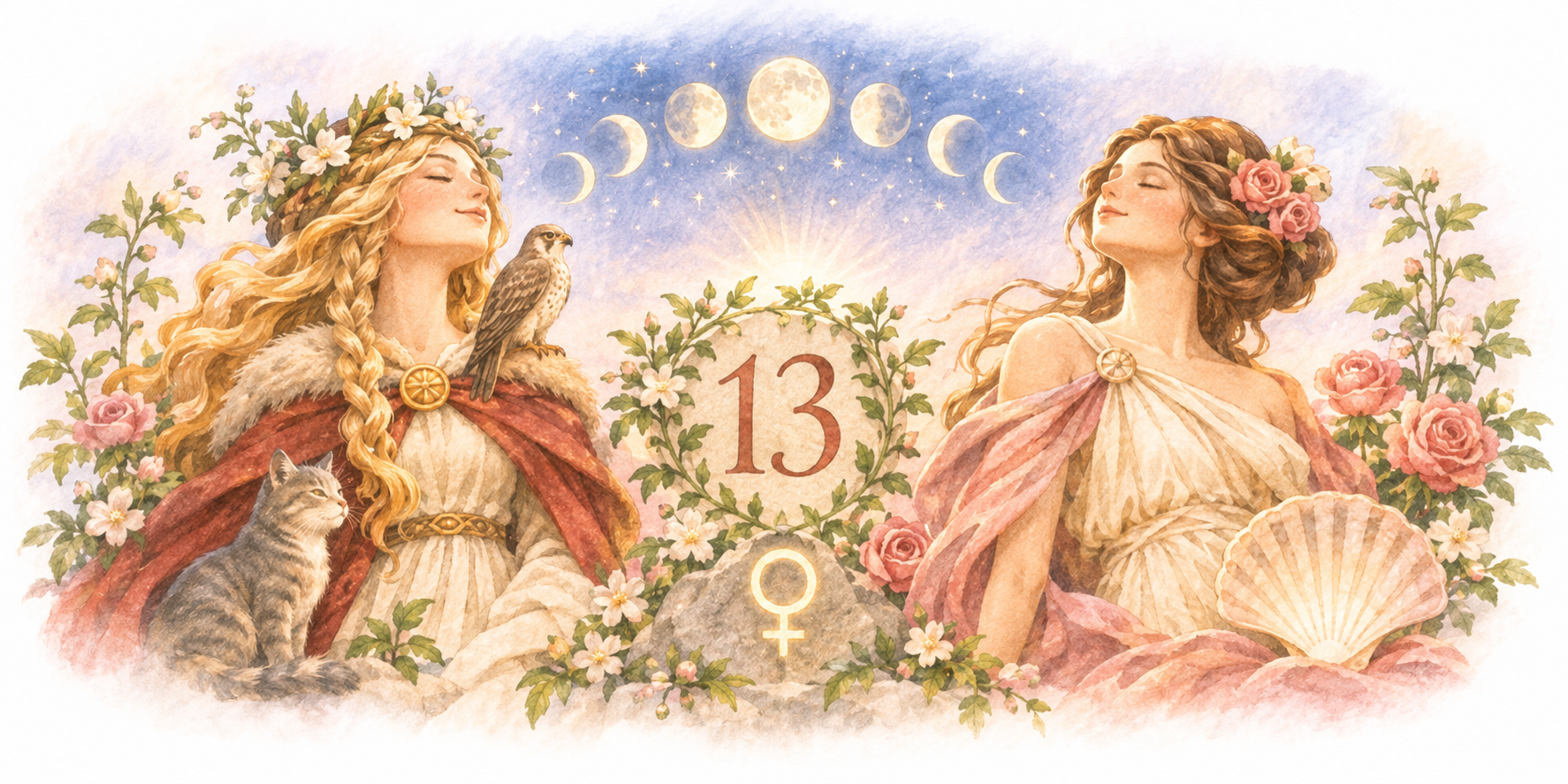
The hidden history of Friday, the number 13, and how a day of love and fertility came to be called unlucky
Today is Friday the 13th, the day we’re told to be afraid of. Fear of it even has a name: friggatriskaidekaphobia, after Frigg, the goddess Friday is named for.
I researched where this superstition came from, and it blew my mind. 🔥
Friday was a day to honor goddesses
In Old English, Friday was frīgedæg, “Frigg’s day,” named for the Germanic goddess of married love. It was a translation of the Latin dies Veneris, “day of Venus,” the Roman goddess of love. Frigg is closely linked with the Norse goddess Freyja, goddess of love, beauty, and fertility, and historians still debate which of the two the day was named for. In German, Friday is still Freitag. In many Indian languages, it’s the day of Venus too.
So Friday began as a day for love, beauty, and fertility. According to folklore, it was even considered lucky, especially for weddings.
Why 13 was sacred
A year holds a little more than 12 moon cycles, so many calendars had 12 months plus a short 13th. Some traditions link those 13 moons with the roughly 28-day menstrual cycle, which also fits into a year about 13 times. In other cultures, 13 was simply sacred: the Maya sacred calendar cycles through 13 numbers, and many Native American traditions connect the 13 scales on a turtle’s shell with the 13 moons of the year.
So how did Friday the 13th become “unlucky”?
Here’s the surprising part. Folklorists say there is no written evidence of a Friday the 13th superstition before the 1800s. One of the earliest mentions in English is a biography of the composer Rossini, who died on a Friday the 13th in November. Most believe it’s a mash-up of two older superstitions: that Friday was unlucky and that 13 was unlucky. The popular Knights Templar story? Historians are skeptical, and it was popularized much later.
But there’s a thread worth pulling. A folk legend says Frigg joined a gathering of 12 witches, making 13, and in the Middle Ages Friday became known as the “witches’ sabbath.” Goddesses of love and fertility were turned into witches, and a day and a number tied to feminine power were turned into omens of bad luck.
Many believe that was no accident, and I do too: that Friday and 13 were labeled unlucky to suppress the celebration of female power. Historians say the exact origin is murky, so this is a theory, not a documented fact. But when a day named for goddesses of love and a number tied to the moon both end up feared, I can’t help but wonder.
Here’s what we do know
Friday began as a day for love. Thirteen was sacred to many cultures. So this Friday the 13th, I’m choosing to celebrate. 💛 I had to share this today because Juniper Helene was indeed born on a very special day! ☺️
Want the rest of the secret histories?
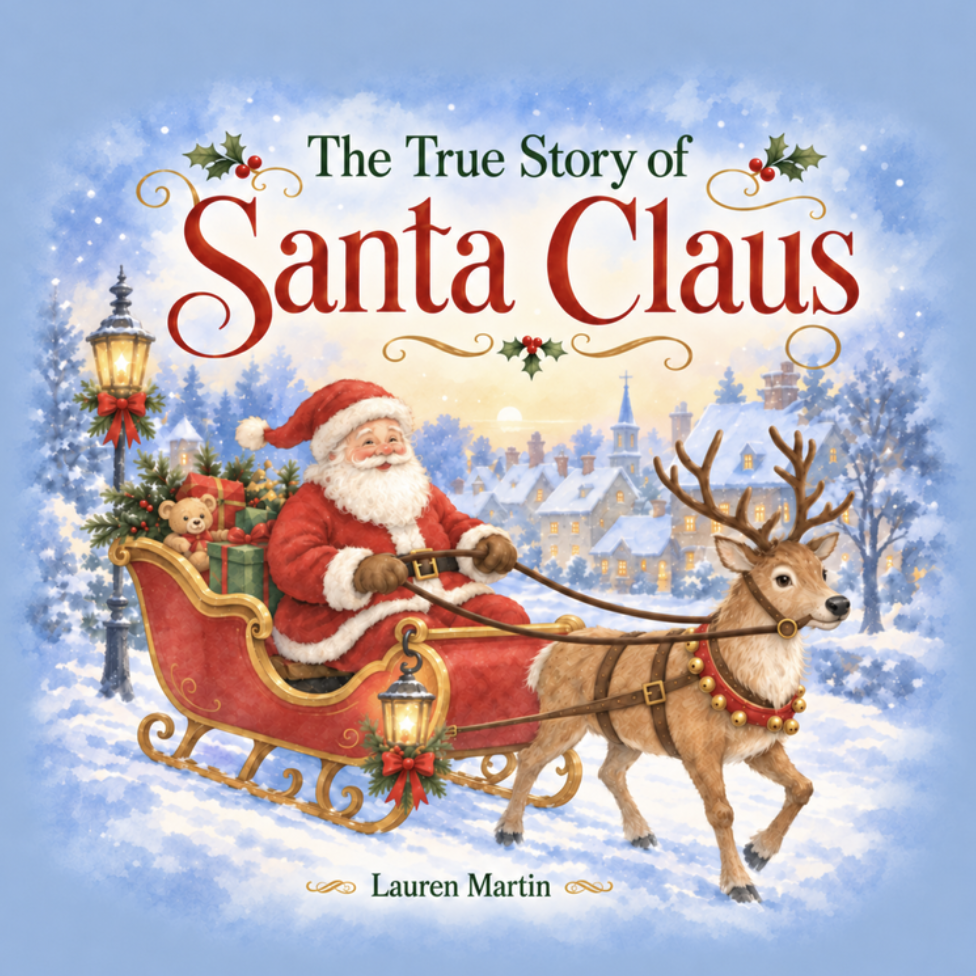
I love learning the origins behind our beliefs and traditions, and it’s why I wrote The True Story of Santa Claus. The book answers the question every parent eventually faces, “Is Santa real?”, with the true story of Nikolaos, the boy who became Saint Nicholas and inspired centuries of secret giving. In the back, you’ll also find the hidden origins of flying reindeer, elves, red robes, stockings, chimneys, trees, wreaths, and lights.
A free way to put the story into action
Saint Nicholas is remembered on December 6 for his secret gifts and care for children. You can start that tradition with your own kids today. I made a free printable, the Miracle Maker, that walks kids through planning their own secret act of kindness. It includes a planning page, conversation starters, a list of trusted, kid-safe ways to help others, a Miracle Log, and an official Miracle Maker certificate.

Print it out, grab your kids, and let them decide how they'll make an ordinary day extraordinary for someone else. That's how Santa’s spirits continues to be real. That’s how his miracles and generosity have continued and will continue for millennia. Not because we tell kids to believe, but because we show them how to become the reason someone else does.
Next up
Subscribe to learn the unbelievable origins of Thanksgiving and Christmas traditions. 🎄